
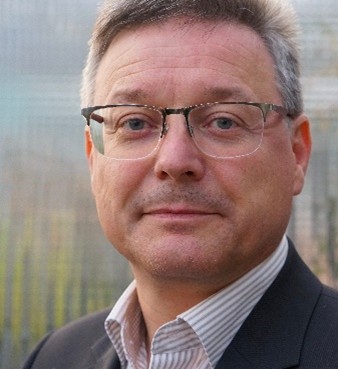
February 2026 - In this interview, Roland Hechwartner summarizes the latest developments from oneM2M’s 73rd Technical Plenary. In addition to chairing oneM2M’s Technical Plenary (TP), Roland is responsible for the coordination of the overall management of the technical work within the TP and its Working Groups (WGs). He is also a representative of Deutsche Telekom (DT).
Q: Would you begin with an overview of the key developments at TP#73?
RH: In addition to wishing your readers a happy start to 2026, I want to thank ETSI for hosting TP73 at their premises in Sophia Antipolis. The TP and WG sessions took place as a hybrid meeting over the period from January 19 to 23, 2026.
This was a business-as-usual gathering with a mixture of organizational management, industry collaboration, and technical standardization activities.
Q: Let us begin with the organizational topic. What is there to report there?
RH: The main development was the election of Seongyun Kim as Vice Chair of the Requirements & Domain Models (RDM) WG. This WG is responsible for the following activities:
- Collection and documentation of use cases that are relevant for oneM2M, including both domain-specific and cross-domain ones.
- Identification and specification of service and system requirements, including interworking aspects to other systems.
- Conduct studies, including aggregation and analysis of requirements, leading to identification of key issues for development of the oneM2M system.
- Elicit ecosystem engagement and gather IoT/M2M service requirements from vertical industry groups and fora.
- Identification and specification of information and data models and ontologies to support harmonisation and interworking with vertical domains and to enable cross domain data exchange.
Seongyun has been actively involved in oneM2M since its establishment. As a delegate of the Korea Electronics Technology Institute (KETI), he will provide technical contributions aligned with KETI’s R&D initiatives, including on-device AI enablement for IoT systems. With other members, I want to add my congratulations and many thanks for the support of the RDM WG.
Q: And what activities have been taking place in relation to industry collaboration?
RH: In the wider industry, edge computing is becoming an important topic and a part of oneM2M’s IoT standardization roadmap for some time.
oneM2M Release 6 is aligned with the ESTIMED project on Enabling Standardized IoT deployments in MEC Environments for advanced systems. The project is a joint work of ETSI ISG MEC and oneM2M. Your readers might recall that ESTIMED is supported with EC/EFTA funding and operates as the ETSI Specialist Task Force 685. During TP73, we had a status update from Joachim Koss, the ETSI STF685 project leader. The Project is progressing according to schedule, with all milestones achieved in time and the next major deadline set for June 2026.
We also spent time on another part of oneM2M’s collaborative initiatives. This focused on our activities with academia through the ACademia Relationship (ACR) ad-hoc group. Our embers organized a discussion as a joint Testing & Developers Ecosystem (TDE) and TP session. We heard from representatives of INRIA and the University of Udine. They shared a demonstration and some use cases for drone fleet monitoring and control. There was also an update of the status of further development of the Asynchronous Contact Tracing use case towards an autonomous footprint service based on oneM2M. These topics are of big interest. The proposed use cases will be handled in the future RDM meetings.
Q: What progress would you highlight from the oneM2M Working Groups?
RH: The Requirements & Domain Models (RDM) Working Group was chaired by Massimo Vanetti (SBS). There was progress on the work item on Enablement of IoT in the metaverse. A new input Contribution was agreed to TR-0069 (Rel-5): RDM-2026-0006 on a use case for secure virtual-physical interaction in smart factories. Furthermore, members agreed on new change requests (CRs) against TS-0023 v5.7.0 covering the mapping of information models for vertical industries using a standardized device template.
On other RDM topics, there was a discussion of input contributions to RDM-2026-0008 which looks at whether oneM2M can be used in satellite ‘Store & Forward’ scenarios. This was an initial discussion of a work item proposal based on specific satellite use cases. Further input is expected with clarifications and more detailed use cases and scenarios.
Finally progress on WI-0091, about oneM2M Services and Platforms Discovery, is now at 90% completion level.
Peter Niblett (Exacta) chaired the System Design & Security (SDS) working group. The WG reports progress on WI-0122 (Agentic AI interworking). Additionally new CRs were agreed on the following:
- TS-0009 HTTP Protocol Binding,
- TS-0010 MQTT Protocol Binding,
- and TS-0034 Semantics Support.
The TS-0034 CR (Advanced Semantic Discovery) was agreed in 2022, but its application was deferred until we had an R5 baseline for the TS. Work can now continue on WI-101 Advanced Semantic Discovery.
Bob Flynn (Exacta) chaired the Testing & Developers Ecosystem (TDE) working group. The WG continues to make progress and enhancements to the git process. The WG session provided an opportunity to report and discuss progress.
There was also a discussion on WI-0111 which deals with oneM2M Architecture Icons. While the work has been completed, subsequent discussions led delegates to conclude that this WI could be closed at the next TP rather than immediately. The discussion arose around the applicability of the current colouring scheme. In some cases, icons can only be identified by the colour. This could be a problem for people with eyesight issues such as colour blindness.
Q: Were there any other approval issues arising during TP73?
RH: Yes. TP delegates approved the new Work Item on FlexContainer-based Device Management Maintenance. The goal of this WI is to move FlexContainer-based Device Management from the TS-0023 to a new specification document and to add missing mappings for TS-0022 defined ManagedObjects specializations. For reference, TS-0023 deals with an SDT based Information Model and Mapping for Vertical Industries. In effect, it is a library of oneM2M-defined information models for appliances from various vertical industries and the mapping with other information models from external organizations. TS-0022 focuses on Field Device Configuration. It specifies the architectural options, resources and procedures needed to pre-provision and maintain devices in the Field Domain.
Q: To close, what are the plans for oneM2M’s next Technical Plenary?
RH: We plan to hold the next TP meeting, TP74, in an online format. The focus will be on the final conversions to git of the remaining Release 5 Technical Specifications, as well as the progress on Release 6. The new and enhanced functional additions to Release 6 include interworking with agentic AI and Robot Operating Systems (ROS), as well as enablement of IoT in the metaverse. The TP75 will be hosted by the University of British Columbia in Vancouver, Canada from June 1-5, 2026.
